


Black Market Hair Transplants, Turkey and Hair Transplant Medical Tourism
If you are considering traveling to Turkey for a hair transplant, the attraction probably isn’t difficult to understand. You may have seen dramatic before and after photos online, been quoted thousands of grafts at a fraction of what surgery can cost in the United States, and found packages that bundle the procedure with transportation and a hotel. When everything is presented together on a phone screen, a medical procedure can start looking remarkably similar to booking a vacation.
That is exactly when common sense needs to take over.
Hair transplant surgery is permanent. The donor follicles removed from the back and sides of your scalp are a limited resource, and once they are removed, you do not get another supply. Before allowing anyone to operate on you, you should know who the physician is, what their qualifications are, who will actually perform the surgical portions of your procedure, whether the proposed graft count makes sense for your donor supply and who will take responsibility for your medical care if something goes wrong after you return home.
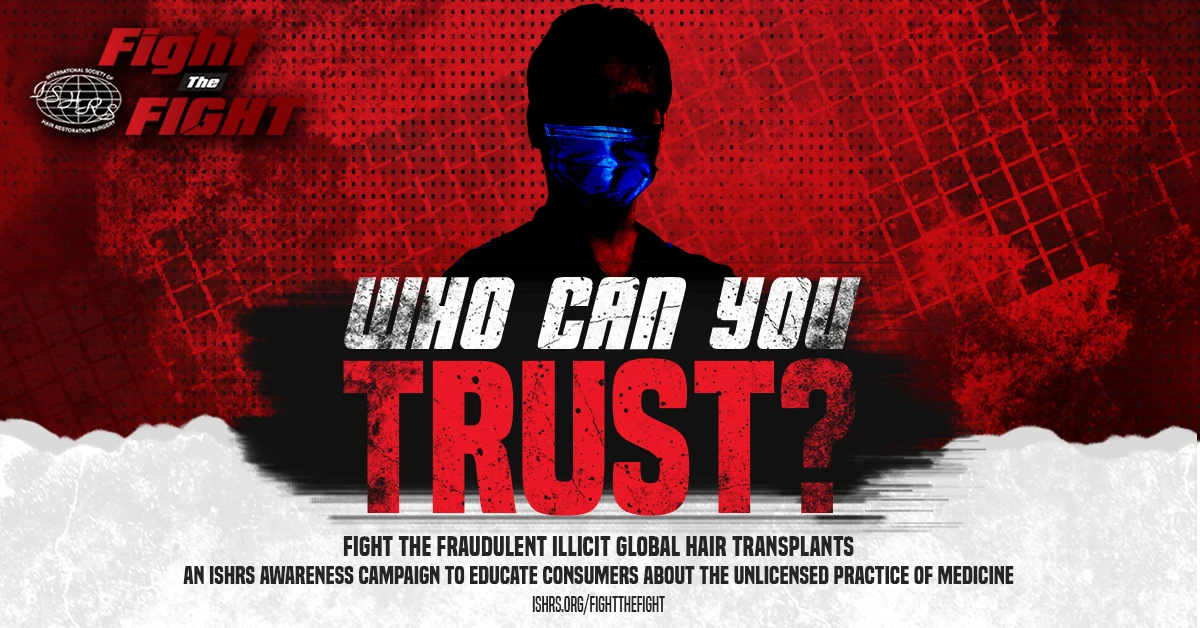
Don’t become a victim of the Fraudulent Illicit + Global Hair Transplants!
Turkey has become a major destination for high-volume, lower-cost hair transplant medical tourism, and the International Society of Hair Restoration Surgery has repeatedly warned consumers about a global hair transplant black market involving unlicensed or inadequately trained individuals performing surgical aspects of hair transplantation. That does not mean every hair transplant performed in Turkey is the same. It does mean that a low price, impressive social media account and polished travel package should never be enough to earn your trust.
If you’re thinking about getting on a plane for a hair transplant, don’t begin with the hotel, airfare or graft count.
Begin with the person who will be holding the surgical instrument.
What is a black market hair transplant?
A black market hair transplant generally refers to hair restoration surgery performed outside appropriate medical, licensing or regulatory standards, including procedures where surgical tasks may be performed by unlicensed or inadequately qualified individuals.
This distinction matters because a hair transplant is considerably more complicated than moving follicles from the back of your head to the front. Before anyone removes a single graft, someone needs to determine why you are losing hair, whether your hair loss is likely to progress, whether you have sufficient permanent donor density and whether surgery makes sense for you at all. Then someone must decide how much donor hair can safely be harvested, where those follicles should be placed and how today’s procedure will look if your surrounding non-transplanted hair continues thinning five, ten or twenty years from now.
If you are considering an overseas clinic, ask who is making each of those decisions. Do not settle for knowing the name of the physician whose photograph appears on the website. Find out whether that physician will actually examine you, develop your surgical plan and participate meaningfully in your procedure. You should also know who will harvest your follicles, who will create the recipient sites and who will be responsible for your medical care if there is a complication.
Those details aren’t the fine print. They are what you’re actually paying for.
Are hair transplants in Turkey safe?
A hair transplant in Turkey should not be assumed to be safe simply because a clinic has thousands of online reviews, impressive before and after photographs or a physician’s name attached to its website.
Turkey’s enormous hair transplant industry has made it easy for American patients to find clinics advertising high graft counts and comparatively low prices. It has also helped create an environment where it can be difficult for a patient thousands of miles away to determine exactly who will perform the procedure and how much direct physician involvement they will actually receive.
If you are considering one of these clinics, don’t assume that seeing a doctor’s photograph or name means that physician will personally perform your surgery. Ask. Find out who will evaluate your hair loss, who will determine how many grafts can safely be removed, who will harvest those grafts, who will create the recipient sites and how much time the physician will actually spend involved in your procedure.
Then ask yourself a simple question. If you were having another elective surgery, would you fly thousands of miles without knowing exactly who was going to operate on you?
A hair transplant deserves the same common sense.
What should you ask a Turkey hair transplant clinic before booking?
Before booking a hair transplant in Turkey, you should know the name and credentials of the physician responsible for you, exactly which parts of the procedure that physician will personally perform and who will provide medical care after you return to the United States.
Do not stop at “a doctor supervises the procedure.” Ask what that means. Will the physician personally examine your scalp and donor area before surgery? Who determines your graft count? Who performs the follicular unit excisions? Who creates the recipient sites that determine the location, angle and direction of the transplanted hair? How many other patients will the clinic be treating that day?
You should also ask why the recommended graft count is appropriate for you. If someone has promised 4,000 or 5,000 grafts based primarily on photographs sent through WhatsApp, ask how your permanent donor density was accurately assessed without an in-person examination. A large graft number can sound like value when you’re comparing packages, but those follicles are coming from a supply you may need for the rest of your life.
Finally, find out what happens when the plane lands back home. If you develop an infection, unexpected bleeding, significant donor-area problems, poor healing or another medical concern in Boston, Rhode Island or elsewhere in New England, who examines you? Who takes responsibility for the complication? And are you communicating directly with the physician who performed your procedure or with a coordinator thousands of miles away?
These aren’t difficult questions.
What matters is whether you get clear answers.
Considering Turkey? Compare More Than the Price
If you are deciding between a lower-cost hair transplant in Turkey and having surgery closer to home, price deserves to be part of the conversation. It simply shouldn’t control the conversation. The difference on a quote is visible immediately. The value of careful donor management, direct physician involvement and accessible postoperative medical care may not become apparent until years later.
Compare the physicians. Verify their credentials. Find out exactly who performs the surgery. Compare real patient results from the medical teams you are considering, not simply photographs displayed on a clinic’s social media account. Ask why the proposed graft counts differ and what each recommendation means for the permanent donor hair you may need later in life. Then consider what happens after surgery when one practice is a drive away and the other is an international flight away.
The cheapest quote is easy to recognize.
The cost of choosing the wrong surgery may take much longer to show up.